
Article: Korean Skincare Routine for Every Skin Concern
Korean Skincare Routine for Every Skin Concern

Korean Skincare Routine for Every Skin Concern: A Step-by-Step Guide
Building a skincare routine can feel overwhelming, especially when there are so many Korean skincare products and ingredients to choose from.
The good news is that you don't need a long list of products to create a thoughtful routine. A simple combination of cleansing, hydration, targeted care, moisturization, and daily sun protection can provide a practical starting point.
The best routine depends on your skin type, skin concerns, and personal preferences. Dry skin may benefit from a richer moisturizing routine, while oily or blemish-prone skin may feel more comfortable with lightweight textures and selected exfoliating ingredients.
In this guide, we'll walk through the basic Korean skincare steps and show you how to adapt them to common concerns such as dryness, breakouts, visible pores, uneven skin tone, redness, and visible signs of aging.
What Is a Korean Skincare Routine?
Korean skincare, often called K-beauty, is known for its focus on hydration, gentle cleansing, skin conditioning, and a variety of targeted products.
Although Korean skincare is often associated with multi-step routines, there is no requirement to use a specific number of products. Some people prefer a minimalist routine, while others enjoy incorporating additional steps such as essences, masks, exfoliators, or targeted treatments.
A simple routine can be enough to get started.
🌼 Morning
Cleanser → Toner or Essence → Serum → Moisturizer → Sunscreen
🌼 Evening
Cleanser → Toner or Essence → Treatment → Moisturizer
Additional products can be added according to your skin's needs.
The important part is not the number of steps. It's choosing products that complement your routine and using them consistently.
The 5 Basic Steps of a Korean Skincare Routine
1. Cleanser
Cleansing is the first step in most routines. It helps remove everyday impurities, excess oil, sunscreen, and makeup.
In the evening, people who wear makeup or water-resistant sunscreen may prefer a two-step cleansing routine:
Oil cleanser or cleansing balm → Water-based cleanser
If you have dry or sensitive skin, a gentle cleanser may be more comfortable than a formula that leaves the skin feeling tight.
For oily or combination skin, a lightweight gel or foaming cleanser can be a practical option.
Choose your cleanser according to your skin
Dry skin: Look for gentle, moisturizing formulas.
Oily skin: Lightweight gel or foaming textures may be preferable.
Combination skin: Choose a cleanser that cleanses comfortably without leaving dry areas feeling stripped.
Sensitive skin: Simple formulas with gentle cleansing agents may be a good place to start.
⭐ Shop Korean Cleansers & Makeup Removers →
2. Toner or Essence
A toner or essence is an easy way to add another layer of hydration after cleansing.
You don't necessarily need both. Choose whichever texture and formula you prefer.
For dry or dehydrated skin, ingredients such as Hyaluronic Acid, Panthenol, Ceramides, and Snail Mucin are commonly found in moisturizing and conditioning formulas.
For skin that tends to feel sensitive or uncomfortable, Centella Asiatica and Panthenol are popular ingredients in soothing skincare products.
If you prefer lightweight skincare, look for watery toners or essences that absorb easily without leaving a heavy finish.
⭐ Shop Korean Toners & Essences →
3. Serum or Treatment
This is the step where you can focus on your primary skin concern.
Rather than trying several active ingredients at once, choose products according to what you would most like to address.
For Dry or Dehydrated Skin
Look for moisturizing ingredients such as:
-
Hyaluronic Acid
-
Ceramides
-
Panthenol
-
Glycerin
-
Snail Mucin
These ingredients are commonly used in formulas designed to provide hydration and help the skin feel more comfortable.
If your skin feels tight or dry, consider keeping the rest of your routine relatively simple rather than adding several exfoliating products.
Explore: ❤️ 18 Best Hyaluronic Acid Serums for Dry Skin & Anti-Aging →
Explore: ❤️ 5 Best Korean Ceramide Moisturizers & Their Skincare Benefits →
Explore: ❤️ Snail Mucin for Skin: Benefits, Uses & How to Add It to Your Routine →
Explore: ❤️ Panthenol (Vitamin B5) for Skin: Benefits, Uses & How to Add It to Your Routine →
For Blemish-Prone Skin
If you experience occasional breakouts or clogged pores, ingredients such as Salicylic Acid (BHA) and Niacinamide may be worth considering.
BHA is an exfoliating ingredient commonly used in products for oily and blemish-prone skin. Niacinamide is frequently included in formulas designed for oil balance and overall skin conditioning.
Centella Asiatica is another popular ingredient in products formulated for skin that can feel easily irritated.
If you are new to exfoliating acids, introduce them gradually rather than adding several exfoliating products at the same time.
Read more: ❤️ Salicylic Acid (BHA): Benefits & Korean Skincare Products →
For Visible Pores and Excess Oil
Pore size is largely influenced by factors such as genetics and skin structure, so skincare cannot permanently change the size of your pores.
However, keeping the skin clean and managing excess oil can help pores appear less noticeable.
Ingredients commonly used in routines for oily or pore-prone skin include:
-
BHA
-
Niacinamide
-
Retinoids
-
Lightweight moisturizing ingredients
Avoid using multiple strong exfoliating products simply because your skin feels oily. A balanced routine can be more comfortable than repeatedly stripping the skin.
Explore: ❤️ Korean Skincare for Pores & Oil Control →
For Dark Spots and Uneven Skin Tone
If your main concern is the appearance of dark spots, post-blemish marks, or an uneven-looking complexion, several cosmetic ingredients may be useful additions to a routine.
Popular choices include:
-
Vitamin C
-
Niacinamide
-
Tranexamic Acid
-
Alpha Arbutin
-
Licorice Root
Vitamin C is often used in morning routines, while Niacinamide can be used in either a morning or evening routine depending on the product.
Daily sunscreen is also an important part of a routine focused on uneven skin tone because UV exposure can contribute to the appearance of pigmentation and visible signs of skin aging.
Read more: ❤️ Vitamin C in Korean Skincare: Benefits & How to Use It →
Explore: ⭐ Korean Brightening Skincare →
For Redness and Sensitive Skin
When your skin is easily irritated, a simpler routine may be a better starting point.
Look for gentle, moisturizing, and soothing formulas containing ingredients such as:
-
Centella Asiatica
-
Panthenol
-
Ceramides
-
Allantoin
-
Green Tea
You don't need to introduce several new products at once. Adding one product at a time makes it easier to see how your skin responds.
If your skin is persistently irritated, painful, swollen, or otherwise concerning, skincare products should not replace professional medical advice.
Read more: ❤️ How to Take Care of Sensitive Skin? →
Explore: ⭐ Korean Skincare for Redness →
For Fine Lines and Visible Signs of Aging
If you're interested in products for visible signs of aging, Korean skincare offers a wide range of formulas containing ingredients such as:
-
Retinal
-
Retinol
-
Peptides
-
PDRN
-
Niacinamide
-
Ceramides
-
Ginseng
Retinol and retinal are vitamin A derivatives commonly used in skincare products formulated to improve the appearance of fine lines, uneven texture, and other visible signs of aging.
If you are new to retinoids, start with a lower frequency and follow the instructions provided with the individual product.
Read more: ❤️ Retinol & Retinal in Korean Skincare →
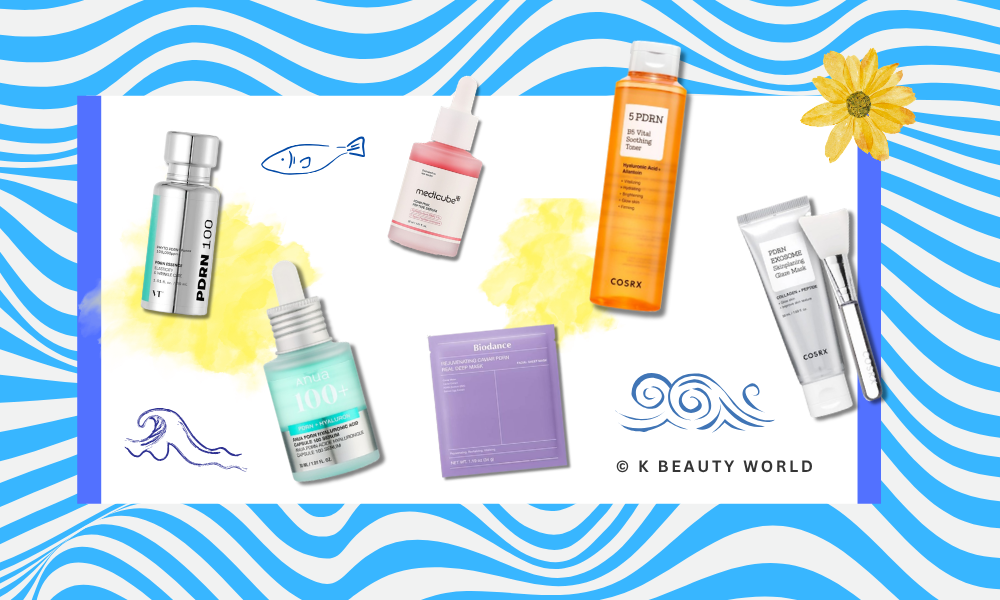
PDRN has also become a popular ingredient in Korean skincare, particularly in formulas focused on hydration, skin conditioning, and a smoother-looking complexion.
Read more: ❤️ PDRN in Korean Skincare: Benefits & How to Use It →
4. Moisturizer
Moisturizer helps maintain hydration and provides a comfortable finishing layer for your routine.
The ideal texture depends largely on your skin type and personal preference.
Dry Skin
Creamier textures containing ingredients such as ceramides, squalane, shea butter, or moisturizing humectants may feel comfortable.
Oily Skin
Gel creams, emulsions, and other lightweight textures can provide moisture without feeling overly rich.
Combination Skin
A medium-weight moisturizer can be a versatile choice. You can also adjust how much product you apply to different areas of your face.
Sensitive Skin
Look for relatively simple formulas with moisturizing and soothing ingredients such as ceramides or Panthenol.
5. Sunscreen
Sunscreen is an essential part of a daytime skincare routine.
Regular UV exposure is associated with premature visible skin aging and can contribute to the appearance of uneven pigmentation.
Choose a broad-spectrum sunscreen with an SPF appropriate for your needs and apply it as the final step of your morning skincare routine.
Korean sunscreens are available in many different textures, including lightweight lotions, gels, and fluid formulas, making it easier to find an option that fits comfortably into your daily routine.
Korean Skincare Routine by Skin Concern
Not sure which ingredients to choose?
Use this table as a starting point.
| Skin Concern | Ingredients to Explore | Main Routine Focus |
|---|---|---|
| Dry or dehydrated skin | Hyaluronic Acid, Ceramides, Panthenol, Snail Mucin | Hydration and moisturization |
| Blemish-prone skin | BHA, Niacinamide, Centella Asiatica | Exfoliation and skin conditioning |
| Visible pores | BHA, Niacinamide, Retinoids | Oil and texture care |
| Dark spots / uneven tone | Vitamin C, Niacinamide, Tranexamic Acid | Brightening and sun protection |
| Redness / sensitive skin | Centella, Panthenol, Ceramides | Gentle, soothing care |
| Visible signs of aging | Retinal, Retinol, Peptides, PDRN | Targeted care and moisturization |
| Dull-looking skin | Vitamin C, Niacinamide, Fermented Ingredients | Brightening and hydration |
You don't need to target every concern simultaneously.
Start with the concern that matters most to you and build from there.
A Simple Korean Skincare Routine for the Morning
If you're new to K-beauty, start with a straightforward routine.
Step 1: Cleanse
Use a gentle cleanser if your skin needs cleansing in the morning.
Step 2: Toner or Essence
Add a lightweight hydrating step if you enjoy using one.
Step 3: Serum
Choose one treatment based on your main concern.
Dryness: Hyaluronic Acid or Panthenol
Uneven skin tone: Vitamin C or Niacinamide
Redness-prone skin: Centella Asiatica
Visible pores: Niacinamide or another suitable treatment
Step 4: Moisturizer
Choose a texture that feels comfortable on your skin.
Step 5: Sunscreen
Finish your daytime routine with sunscreen.
A Simple Korean Skincare Routine for the Evening
Your evening routine can focus more on cleansing and targeted care.
Step 1: First Cleanse
If necessary, use a cleansing oil or balm to remove makeup and sunscreen.
Step 2: Second Cleanse
Follow with a gentle water-based cleanser.
Step 3: Toner or Essence
Add hydration according to your preference.
Step 4: Treatment
Apply your chosen serum or treatment.
Depending on your routine, this could be a hydrating formula, BHA product, retinoid, Vitamin C product, or PDRN-containing formula.
Step 5: Moisturizer
Finish with a moisturizer that suits your skin type.

How to Introduce New Skincare Products
Adding several new products at once can make it difficult to know which product your skin likes—or dislikes.
A more gradual approach can be easier.
Start with the basics:
Cleanser → Moisturizer → Sunscreen
Then add a hydrating toner or essence if desired.
Once your basic routine feels comfortable, introduce one targeted product at a time.
When using exfoliating acids or retinoids, follow the individual product instructions and avoid automatically combining several strong actives in the same routine.
If irritation develops, consider simplifying your routine until your skin feels comfortable again.
Can You Use Retinal, Vitamin C, BHA and PDRN Together?
There isn't one combination that is right for everyone.
The answer depends on the individual products, their formulas, concentrations, and how your skin responds.
Instead of trying to use every active ingredient in the same routine, you can separate products between your morning and evening routines or use them on different days.
For example:
🌼 Morning
Vitamin C → Moisturizer → Sunscreen
🌼 Evening
Retinal → Moisturizer
A PDRN-containing hydrating product can be incorporated according to its formulation and the rest of your routine.
If you use BHA, consider introducing it separately rather than adding it at the same time as several other active ingredients.
For more guidance on combining ingredients, see our dedicated skincare ingredient guides.
Do You Need a 10-Step Korean Skincare Routine?
No.
A longer routine isn't automatically better than a shorter one.
For many people, the essentials are:
Morning
Cleanse → Hydrate → Treat → Moisturize → Sunscreen
Evening
Cleanse → Hydrate → Treat → Moisturize
Additional steps such as masks, exfoliators, eye creams, essences, or ampoules are optional.
The right number of products depends on your skin, the formulas you choose, and how comfortable you are maintaining your routine.
If you prefer a minimalist approach, start with the essentials and add products only when you have a reason to do so.
Which Korean Skincare Ingredients Should You Try?
If you're unsure where to begin, start with your primary concern.
For hydration
Explore Hyaluronic Acid, Panthenol, Ceramides, or Snail Mucin.
For soothing care
Consider Centella Asiatica, Panthenol, Ceramides, or Allantoin.
For uneven-looking skin tone
Explore Vitamin C, Niacinamide, Tranexamic Acid, or Alpha Arbutin.
For visible pores
Consider BHA, Niacinamide, or retinoids.
For visible signs of aging
Explore Retinal, Retinol, Peptides, or PDRN.
Remember that ingredients can behave differently depending on the overall formulation. A single ingredient name doesn't tell you everything about how a product will feel or perform.
Build a Routine That Fits Your Skin
There is no single Korean skincare routine that everyone needs to follow.
Start with the basics and choose products according to your skin type and main concern.
Cleanse → Hydrate → Treat → Moisturize → Protect
From there, you can personalize your routine with ingredients such as Centella Asiatica, Ceramides, BHA, Vitamin C, Snail Mucin, Retinal, or PDRN.
You don't need to use all of them.
Choose what makes sense for your skin, introduce new products gradually, and give your routine time to become part of your daily habits.
Explore K-Beauty by Skin Concern
⭐ Acne & Blemishes
Find products formulated for blemish-prone skin.
⭐ Dryness & Hydration
Explore moisturizing products and hydrating ingredients.
⭐ Sensitive Skin & Redness
Discover gentle formulas featuring soothing and conditioning ingredients.
⭐ Pigmentation & Brightening
Explore products designed to improve the appearance of uneven skin tone.
⭐ Pores & Oil Control
Find lightweight products and targeted formulas for oily or combination skin.
⭐ Anti-Aging
Explore products featuring Retinal, Retinol, Peptides, PDRN, and other popular skincare ingredients.

Leave a comment
This site is protected by hCaptcha and the hCaptcha Privacy Policy and Terms of Service apply.